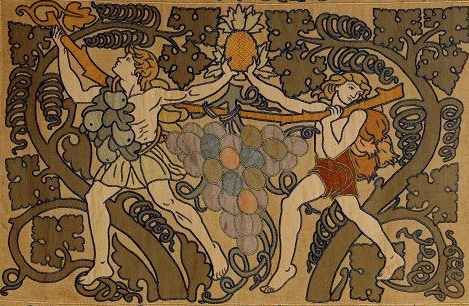
Friday, 23 May 2014

Skilbeck Brothers Dry salters 1650 -1950


When I was looking through the Haslemere Educational Museum's dye books, one of the most astounding finds for me was some booklets of dyes and mordants by the Skilbeck Brothers.

The company advertised as being in operation since 1650.  Given that there is a book by Donovan Dawe's Skilbecks: drysalters, 1650-1950 held in the Printed Books Section of Guildhall Library, I deduce that Skilbecks went out of business in 1950.  Wikipedia says "According to a report published by the Bank of Korea on May 14, 2008 investigating 41 countries, there were 5,586 companies older than 200 years. From these 3,146 are located in Japan, 837 in Germany, 222 in the Netherlands and 196 in France."  Whilst not referring to the UK, the other statistic I could find on the subject of long running companies was from the BBC in 2012 "The average lifespan of a company listed in the S&P 500 index of leading US companies has decreased by more than 50 years in the last century, from 67 years in the 1920s to just 15 years today, according to Professor Richard Foster from Yale University."

Skilbeck Brothers catalogue 1924
Reproduced courtesy of Haslemere Educational Museum

The dyeing that occurred on Kings Road was recorded by Beryl Pooley (The Changing Face of Shottermill, Acorn Press, 1987) as "Children in those days could earn pocket money by collecting plants in woven shoulder bags and taking them to the dyeing house (opposite the weaving house) to be used to dye the skeins of thread for weaving…" but it would appear from the dye recipes and the presence of the Skilbeck booklets that there was a definite bought element to the dyeing ingredients.   Or perhaps the use of the Skilbeck booklets and the recipes that I have posted on here and here are remnants of a later time, in the 1920s when the Peasant Arts Society and the dyeing operations were potentially on a downward curve?  

Skilbeck Brothers booklet
Reproduced courtesy of Haslemere Educational Museum


One of the booklets begins with "This booklet is not to be taken as a textbook on Vegetable Dyeing, but our object in issuing it is to give such useful and historical information on the old dyes that should prove interesting to anyone already using or about to use them.

"In these days of modern inventions and improvements it is noteworthy that many of these dyes have been employed in very much the same way since man found the beauty of decoration and colour.

"It is our hope, therefore, that with such information as we can put before you, you will find an interest that is historical as well as artistic in one of the oldest of the crafts"


Skilbeck Brothers booklet
Reproduced courtesy of Haslemere Educational Museum
 Some of the explanations reflect ingredients in recipes reproduced in previous posts.  On Fustic, Skilbeck says "The wood of a tree grown in Brazil, Mexico and the West Indies.  One of the most important of all yellow colouring matters.  Extensively used in conjunction with Logwood for dyeing blacks and with other colouring matters for compound shades such as browns, olives, drabs, etc.  With Chrome mordants produces olive to yellow:

                                 shades

    • Alum - yellow
    • Iron -    dark olive
    • Copper - olive
    • Tin -       bright orange"


from a Skilbeck Brothers booklet
Reproduced courtesy of Haslemere Educational Museum

from a Skilbeck Brothers booklet
Reproduced courtesy of Haslemere Educational Museum

price list from a Skilbeck Brothers booklet
Reproduced courtesy of Haslemere Educational Museum

from a Skilbeck Brothers booklet
Reproduced courtesy of Haslemere Educational Museum


Thursday, 22 May 2014

Dyeing in Haslemere - some handmade recipes

Amongst Haslemere Educational Museum's collection of the Haslemere Peasant Arts' dye recipes are some handwritten recipes.  I am not sure whether these recipes were recorded by the Peasant Arts group or perhaps later by the weavers who continued to work in the Weaving House at 113 Kings Road after the closure of the Peasant Arts Society in 1933 or the later Inval Weavers.  Presumably these recipes are ones either devised by the Haslemere weaving movement themselves or passed on from someone else.

section of Godfrey Blount's 1896 hanging held by the V&A museum
showing possible golden and lemon yellow dye colours
section of Set of Valance, (possibly) Haslemere Peasant Industries
held by the V&A museum
showing possible golden yellow and lemon yellow

Golden Yellow
For 1lb of Wool
Mordant, 1ozs bichromate of Potash
Dye 2ozs fustic

Put in the dye bath enough soft water to cover the mordant.  Heat until the mordant is dissolved and then add the wool and bring slowly to the boil and boil for one hour.  The wool is then ready for the dyeHave read 2ozs of Fustic, loosely tied in a thin cotton bag, and soaked over night or previously brought to the boil in a separate saucepan.  Add the bag with the dye in, to the pot of water, and  then add the wool and boil for third minutes.  To get a lemon yellow use alum as for like mordant 4 ozs of alum to 1lb of wool, and only 1ozs of fustic continue the same as for Golden Yellow.

Golden yellow dye recipe
Reproduced courtesy of Haslemere Education Museum
Detail of napkin by Haslemere Peasant Arts
Reproduced courtesy of The Dartford Warbler
Is this colour a logwood blue?
Logwood Blue
Mordant - To 1lb wool - 1/4 oz bicromate potash, 1/4 oz cream of Tartar

Put into boiling water and when dissolved, enter wool and boil for 3/4 hour.

Wet wool before mordanting and rinse after and cover up (the light has an effect on colour).

Dye - To 1 lb wool, - 2 ozs logwood.  Boil dye for 1/2 hour, remove from pot and put in wool and boil for 1 hour, well rinse and hang out to dry.

section of The Spies by Godfrey Blount c.1900 held by V&A museum
does this show the green and purple dye from the recipes?

Green
Mordant - same as for Logwood blue
Dye - To 1 lb wool - 3oz fustic, 1 oz logwood
For lighter shade add another 1/2 oz rustic to each lb.

Purple
Morant - 3 oz alum, 1 oz cream of tartar to every 1 lb wool.
Boil as recipe for blue.
Dye - to 1 lb wool, 3 oz logwood.

Dye recipe
Reproduced courtesy of Haslemere Educational Museum

Wednesday, 21 May 2014

Dyeing in Haslemere - some recipes

I have squinted and tried to record what some of the dye recipes in Handbook on Dyeing, Etc. for woollen homespun workers (R. P. Milroy, Congested Districts Board for Ireland) say from the pictures in my previous post.  If you try any of them, please let me know how you get on!


Haslemere Peasant Arts movement, blue table runner,
Reproduced courtesy of Haslemere Educational Museum
Does this piece contain a blueish dye tint from bracken fern?


To Dye a Blueish Tint from Stem and Leaves of Bracken Fern

"Quantity 100 oz clean wool
Mordant: 8oz alum
   Boil the wool in the mordant for an hour, and wash in cold water.
Dye: 50 to 60oz of bracken leaves and stems
   Enter the mordanted wool, raise to the boil, and boil for an hour.
Wash thoroughly in cold water and dry.

A brown shade may be obtained from Peat Soot, by boiling the wool for an hour with sufficient Peat Soot to give the requisite colour.  The dye liquor should be of a darker shade than the wool is required, and the addition of a small quantity of common salt would be found useful.

A black can be obtained from Bog Ink, the usual method being as follows:-
For 100 oz of clean wool use 50 oz water-lily roots, boiling in this dyeing liquid for an hour.  This gives a dark-brown shade.  After this the wool is again for an hour in a dye bath containing 50oz of Bog Ink."

Haslemere Peasant Arts weaving bag
Reproduced courtesy of Haslemere Educational Museum
Does this display madder red dye?  Old gold?  Golden brown?


To Dye Madder Red

“Quantity – 100 oz clean wool
Mordant 8oz Alum, 2oz Tartar
Boil the wool in the mordant for one hour, and wash in cold water.
Dye 50 oz Madder
Enter the mordanted wool, raise to the boil, and boil gently for one hour.

Wash thoroughly in cold water and dry.

The method is exactly the same as when mordanting with Bicarbonate of Potash, except that the boiling is kept up for an hour, both in the mordant and the dye bath.


If the water is very soft, a small quantity of lime or chalk added to the dye bath improves the shade, and a small quantity of alder bark or of alder leaves, added to the dye bath will…”

To Dye Old Gold

"Quantity: 100 oz clean wool
Mordant: 3 oz Bichromate of Potash
              Boil the wool in the mordant for 45 minutes, and wash in cold water.

Dye:      24 oz Fustic, 6 oz Madder

Transfer the mordanted wool to the dye pot, raise to the boil, and boil for three-quarters of an hour.

Wash thoroughly in cold water and dry."

To Dye Golden Brown

"Quantity: 100 oz clean wool
Mordant: 3 oz Bichromate of Potash
               Boil the wool in the mordant for 45 minutes and wash in cold water.

Dye:        24 oz Madder, 14 oz Fustic, 3 oz Logwood
              Transfer the mordanted wool to the dye pot, raise to the boil, and boil for three-quarters of an hour.

Wash thoroughly in cold water and dry."

To Dye Claret
"Quantity: 100 oz clean wool
Mordant: 3 oz Bichromate of Potash
               Boil the wool in the mordant for 45 minutes, and wash in cold water.

Dye:       30 oz Madder, 3 oz Logwood
              Transfer the mordanted wool to the dye-pot, raise to the boil, and boil the three-quarters of an hour.

Wash thoroughly in cold water and dry."

Friday, 16 May 2014

Dyeing in Haslemere


The Haslemere Educational Museum have some interesting remnants of the dyeing industry performed by the Haslemere Peasant Arts movement.

The primary Peasant Arts work that springs to mind exhibiting vegetable dyes is The Spies.

The Spies, Godfrey Blount
Victoria and Albert Museum, London
The museum have a copy of Handbook on Dyeing, Etc. for woollen homespun workers (R. P. Milroy, Congested Districts Board for Ireland) which has two stamps on the inside cover "The Peasant Arts Guild, The Homespun and Rug Weaving Industry", plus "The Spinning and Weaving School Kings Road  Haslemere" is written between these two stamps.  This suggests that Milroy's book was used as a handbook for reference at the Spinning and Weaving School on Kings Road.  I am not clear which building that would have been, but most probably it was either the Weaving House or the Dye House on Kings Road.

The Peasants Arts Guild
reproduced courtesy of Haslemere Educational Museum

R.P's Milroy's Handbook on Dyeing
reproduced courtesy of Haslemere Educational Museum

The splattered pages of the book are particularly evocative of the time, conjuring up a scene where vats of vegetable dye bubble away as industrious local workers transport their homespun wool from the Dye House to the Weaving House.   I wonder how they consulted the book?  And which dyes were the most popular?

from R. P. Milroy's Handbook on Dyeingreproduced courtesy of Haslemere Educational Museum
Some recipes that caught my eye were to dye:
  • dark green
  • dark olive green
  • madder red
  • golden brown
  • claret
  • light crotal shade
  • brownish tint from stem and leaves of bracken fern

from R. P. Milroy's Handbook on Dyeingreproduced courtesy of Haslemere Educational Museum

Saturday, 10 May 2014

Renovating the Three Shuttles Weaving Sign

An old original Haslemere weaving sign was re-discovered in the archives at Haslemere Educational Museum a few years ago.  It was restored and is now on display in the Haslemere Peasant Arts section of the museum.   The sign was renovated by Ian Clark Restoration, who share some photographs of the sign before and after restoration on their website here.  They state "ICR was contacted to conserve this rare survivor of wrought iron folk art.  The ironwork and remains of the original decorative scheme was sensitively cleaned, consolidated and conserved."

Restoration of Haslemere's Three Shuttles sign


Restored Three Shuttles sign on display at
Haslemere Educational Museum
There are a number of old photographs which show the sign outside of various Haslemere buildings.  I wonder which building the restored sign once hung outside?

Weaving Sign, Kings Road from Winter and Collyer, Around Haslemere and Hindhead in Old Photographs, Alan Sutton Publishing, 1991
The Three Shuttles sign hanging outside
The Weaving House, Kings Road, Haslemere
c.1900
The Three Shuttles sign
hanging somewhere in Haslemere?
reproduced courtesy of Haslemere Educational Museum

The Three Shuttles sign hanging outside
Peasant Arts Society Shop,
No. 1, The Pavement, High Street
c.1900
Related Posts Plugin for WordPress, Blogger...