Wednesday, 10 November 2010

Literature: An Overview

All of the five main members of the Peasant Arts movement published works:

Ethel Blount -

  • The Story of the Homespun Web - a Simple Guide to Spinning and Weaving (1910)
  • Our experience of the Influence of Handicraft upon the Workers, Ethel Blount and Maude E. King
  • Translated a chapter 'About Kickel, Who Went to Prison' in Rosegger, Forest Farm, Vineyard Press, 1912


Godfrey Blount - 
The majority are out of print but Arbor Vitae and The Science of Symbols are available at http://www.archive.org/search.php?query=godfrey%20blount


  • Songs of the Sower (1898)
  • Arbor Vitae (1899)
  • The Founding of a Folk Church Being a Letter to the New Crusade
  • Our Daily Bread: A song with pictures (1898)
  • What is Art? (1899) Peasant Art Pamphlet
  • The Cross of the New Crusade
  • The Gospel of Simplicity: a plea for country life and handicrafts (1903)
  • The Rustic Renaissance (1905) Simple Life Series no. 21
  • For Our Country’s Sake
  • Unemployment: Its Cause and Cure
  • The Country Prayers
  • Vine and Fig Tree
  • The Cause of the Evil
  • Art and Religion
  • A New Crusade: an appeal (1903)
  • The Science of Symbols (1905) 
  • The Motto of the New Crusade
  • The Spirit of the New Crusade
  • Gifts of St Nicholas: a study in toys (1911)
  • The Blood of the Poor: An introduction to Christian social economics (1911)
  • Toys, True and False

Joseph King - 
None of King's works appear to be in circulation.  According to the Hilltop Writers (W.R.Trotter, The Hilltop Writers, The Book Guild Ltd, 2003) Joseph King was the author of:
  • The School Manager (1903)
  • Electoral Reform: An Inquiry into our System of Parliamentary Representation, T. Fisher Unwin (1908)
  • Chapter 1. Houses, The Management of Private Affairs, King, Bigham, Gwyer, Cannan, Bridge & Latter, Claredon Press (1908)
  • Filius Nullius (Nobody's Child) (1913) A pamphlet
  •  The Russian Revolution: The First Year, Pamphlet, (January 1918)
    Soviets and Soviet Government, How it Arose in Russia, How it Works There, How it has been Imitated Elsewhere, and the Chances of Success for Soviets in Other Countries, Pamphlet (1919)
     Russia and her allies: An account of British policy towards Russia, and of the military intervention of the allies, against the Soviet government, with…now ranged against it, Pamphlet (1919)

    The collapse of Germany (1923)
  • Peasant Arts (1927)
  • The German revolution, its meaning and menace, Williams and Norgate, 1933

    Invasion today, Watts & Co. (1941)


Maude Egerton King - 
  • Poems (1885)
  • My Books of Songs and Sonnets (1893)
  • Roundabout a Brighton Coach Office (1896)
  • Bread and Wine: A Story of Graubunben (1902)
  • The Country Heart and Other Stories (1911)
  • Mrs Everywoman's Thoughts Today (1943)
  • A Cottage Calendar (editor)
  • The Christmas Tree.  A tale (1898)
  • The Conversion of Miss Caroline Eden (1900)
  • Studies in Love. Tales (1900)
  • Gothic Ruin and Reconstruction (1910)
  • The Country Heart and ther stories (1911) 
  • How the Children Met the Three Kings.  A little Christmas play for home or school acting (1912)
  • Our experience of the Influence of Handicraft upon the Workers, Ethel Blount and Maude E. King
  • Translation and appreciation in Rosegger, Forest Farm, Vineyard Press, 1912


Greville MacDonald - 
Greville's works varied widely from a few medical books, to ethical issues and fairy tales.
  • On the Respiratory Functions of the Nose and Their Relation to Certain Pathological Conditions (1889)
  • The Tree in the Midst: A Contribution to the Study of Freedom (1904)
  • The Religious Sense in its Scientific Aspect (1904)
  • The Child's Inheritance: Its Scientific and Imaginative Meaning (1910)
  • The Sanity of William Blake (1920)
  • The North Door: A Romance (1920)
  • George MacDonald and his Wife (1924)
  • Children and the Stress of Life (co-authored with Helen Gibb, 1929)
  • Reminiscences of a Specialist (1932)
  • The Ethics of Revolt
  • How Jonas Found His Enemy
  • A Treatise on Diseases of the Nose and Its Accessory Cavities 
Fairy tales:
  •  Count Billy
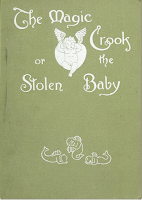
  • The Magic Crook Or the Stolen Baby (1911)
  • Trystie's Quest or Kit, King of the Pigwidgeons (1912)
  • Jack and Jill (1913)


Tuesday, 9 November 2010

Comments on the work - The Studio


The Studio described itself as ‘an illustrated magazine of fine & applied art’.  Published in London from 1883, it was an important source of arts and crafts news, featuring exhibitions, reviews and lots of pictures of this new art.  Most copies of The Studio are available at 
http://www.archive.org/search.php?query=the%20studio


The Studio vol 11-13
The Home Arts and Industries Association at the Royal Albert Hall 1897.  “Perhaps the most novel examples in the whole Exhibition were some bold and simply embroidered pieces of appliqué-work after designs by Mr. Godfrey Blount.”  – refers to Kate Shawyer and the Class pictures below

Applique-work, Portiere, designed by Godfrey Blount, Executed by Kate Shawyer, Haslemere
Applique-work Portiere, designed by Godfrey Blount, executed by the Class, Haslemere


The Studio vol 17-19
The Home Arts and Industries Association.  “Among the textiles, the Haslemere peasant tapestries deserve special praise for steady development on bold yet wisely unpretentious lines.  Under the tuition of Mrs Godfrey Blount the villagers have learnt to set simple appliqué patterns with accurate finish, and often with surprisingly rich effect.  Their work should be greatly helped by Mrs Joseph King’s weaving industry in the same district, through which some very fine and substantial fabrics are now being produced.”

The Studio – vol 29
Liverpool handicraft exhibition with the main object of the exhibition being the revival of the spirit of the old craft guilds – the upholding of the dignity of hand labour as opposed to the production of decorative work by machinery.  “The Haslemere peasant industry sent a fine appliqué hanging, The Spies, designed by Godfrey Blount, and several rich hand-woven rugs, all work of a high quality.”


The Studio, vol 29
At Haslemere, many years of wisely directed work on the part of Mrs Joseph King and Mr, and Mrs. Godfrey Blount have resulted in a “developed industry’ of spinning, weaving and embroidery which, for the quality and variety of its output, may now compare with anything of the kind in this country.  The workers have a very real sense of beauty in texture, colour and ornament, and their work has the charm and freshness of being deliberately and intelligently done.  Their woven wool rugs are again conspicuous for their soft finish and delicate colouring; and the fine qualities of the craft have been in no way coarsened by its application to the heavier stuffs.  The linen and woolen hangings, household tapestries, and dress goods are as pleasing as ever; and the appliqué embroideries show many novelties in design without departing from the breadth and simplicity which have marked them from the first.


Hand-woven pile rug designed by Godfrey Blount

Peasant Tapestry Wall-Hanging "The Deep Sea" designed by Godfrey Blount

Hand-woven Linen Coverlet designed by Godfrey Blount
Peasant Tapestry Wall-Hanging designed by Godfrey Blount
Portion of a Frieze of Coloured Woodcarving designed by Godfrey Blount

Box designed by Godfrey Blount


The Studio, vol 43, February 1908
At this point 12 or so girls are being taught at St. Cross.  It is noted that the spinning wheel is not often used.  The Weaving House is called one of the most artistic buildings in Haslemere.

“The revival of handicraft at Haslemere, and especially the introduction there of the handloom, owes its inspiration principally to that unique personality, Mr. Godfrey Blount. At his house, St. Cross, a dozen or so of village girls are taught to weave at the hand-loom. Peasant tapestry (applique), hand-woven pile carpets and tapestry carpets are worked by well-trained hands here. These are sold either at the shop of the Peasant Arts Society in the High Street, Haslemere, or at the London Depot of this Society, which was founded by Mr. Blount in 1896 at 83, New Cavendish Street, W. Mr. Godfrey Blount is largely responsible for the exquisite designs, though Mrs. Blount often suggests the harmonies in colour, and besides teaching the girls, herself weaves at the hand looms. The great difficulty at Haslemere has been that of trying to wed cheapness to beauty, and the sacrilegious nail in furniture making has been an innovation of quite recent years. The Spinning Wheel, as shown in the photograph, is
not often used.

The Haslemere Weaving Industry was founded in 1894 by Mr. and Mrs. Joseph King, and is
really a branch of the Peasant Arts Society. Miss Jones manages this Industry, and many ladies who have desired to set up hand-looms of their own and weave on their own account have been pupils under Miss Jones. One large fly-shuttle is used here besides the ordinary hand-looms, and from the flax obtained from Ireland the girls weave cotton for the making of frocks, pinafores, towels, etc. This is altogether a larger workshop than the one at St.Cross, and is certainly one of the most artistic buildings in Haslemere.”

Hand-loom workers at St. Cross, Haslemere
Weaving Room of Haslemere Weaving Industry


Monday, 8 November 2010

Biographies: Greville MacDonald


Greville Matheson MacDonald was born in 1856 in Manchester, the first son of George MacDonald (the famous Scottish writer) and Louisa MacDonald (nee Powell).  Louisa's elder sister Phoebe was Joseph King's mother.  Greville's involvement with the Peasant Arts movement included partly financing the movement and launching the Vineyard magazine.

Greville and Joseph being cousins explains how Greville was linked to the Peasant Arts movement in Haslemere.  Out of the five main members of the Peasant Arts movement, it is possible to know the most about Greville as he published his autobiography, ‘Reminiscences of a Specialist’ in 1932.
Greville MacDonald, from Reminiscences of a Specialist, 1932

Aside from Greville’s involvement in the Peasant Arts movement, his family life is very interesting due to his experiences as George MacDonald’s son, his father being one of the most famous writers at the time.  His reputation and lifestyle led Greville to friendships with a number of well-known people.

The family left Manchester when Greville was 3 weeks old due to George MacDonald’s health – he was diagnosed as ‘dying of haemorrhage from the lungs’ when Greville was born, and it was advised that the family leave the ‘fogs of an over-chimneyed city’ (MacDonald, 1932, Reminiscences of a Specialist, London, George Allen and Unwin) – and spent the Winter in Algiers with ‘much help’ from Lady Byron who Greville describes as an ‘unfailing friend’ of his father, having been attracted to his father’s first book ‘Within and Without’.
George MacDonald with Greville MacDonald, from Reminiscences of a Specialist, 1932

In 1861 the MacDonald’s are living in Hastings, they then moved to Kensington and from there in 1867 to Hammersmith, London.  Greville describes this house, recorded on the census as ‘The Retreat’ as facing the river with an acre of old garden, the family however decided to move as they believed the location was responsible for Greville’s sister Mary contracting tuberculosis.  They sold the house to William Morris in 1878, who lived there until his death in 1896.  Morris renamed the house Kelmscott House and made it a famous address.
Greville MacDonald drawn in kilt by Lewis Carroll, Reminiscences of a Specialist, 1932

Greville is famous for having read ‘Uncle Dodgson’s’ (Reverend Charles Dodgson, otherwise known as Lewis Carrol) Alice in Wonderland when Dodgson was wondering whether to publish it.  Greville’s mother read the book to the children to gauge its worth if published, and Greville remembers his ‘braggart avowal that I wished there were 60,000 volumes of it’.  The above picture was sketched by Lewis Carroll whilst Greville was modelling for Alex Munro, whose resulting statue now resides in Hyde Park.  It refers to a joke that they were having about the advantage of having a marble head, 'for then it would never suffer from combing its curls and could not be expected to learn lessons', and that such a head would terrify the sculptor Alex Munro.  Greville is shown holding the said marble head.

Greville attributes his understanding of Latin to Octavia Hill (who became a co-founder of the National Trust in 1895, along with Haslemere’s Sir Robert Hunter) who joined the family on holiday in 1867 at Bude, and became a life-long friend of Greville. 

Greville went to Kings College School and then went to train at Kings College Hospital.  Despite suffering from partial deafness which degenerated with age, Greville became an ear, nose and throat doctor of some distinction, residing at 85 Harley Street until he moved to Wildwood, Weydown Road, Haslemere in 1919.  Greville’s autobiography describes him as a ‘consulting physician to Kings College Hospital’ and ‘Fellow and Emeritus Professor, Kings College, London’.   Greville married his wife Elizabeth Phoebe Winn in 1887, they had no children, but from a dedication in one of his books, it would appear that he adopted a girl, ‘Mollie Gamble’.

Statute that Greville modelled for as a boy, Reminiscences of a Specialist, 1932
Greville was no stranger to Haslemere, in 1900 Greville’s parents moved to St George’s Wood, Grayswood Road, Haslemere, into a house that he had had built for them, where his frail father spent his final few years.  What Greville describes as his ‘best friends’ Joseph King, Maude Egerton King, Godfrey Blount and Ethel Blount lived there, and he had visited and stayed with them often.  In 1913 Greville’s wife ‘lost a leg’ and that seems to be part of the reason behind his move to the country.  Greville describes his involvement in the Peasant Arts movement as ‘happy that I might possibly help them, I soon assigned my scanty leisure, along with some too easily earned money, to the support of their Society.’ 

It was Greville who negotiated the purchase of the Museum of Peasant Arts from Reverend Gerald Davies in 1908, ‘at a price well below its value, but on the condition that it should never be displayed in any City Museum, where, he thought, its beauties might be swamped, and its materials damaged by smoke.  Realizing the national worth of the collection I put it, by Trust Deed, in the hands of the Founders of the Peasant Arts Guild for the public benefit, thus protecting it against any possible mishap to the Guild’.  Greville describes himself as launching The Vineyard Magazine in 1910. 

Greville wrote a number of books on widely varied subjects, including a biography of his father and mother ‘George MacDonald and his Wife’, some complex works such as ‘The Sanity of William Blake’, ‘The Religious Sense in its Scientific Aspect’, and fairy tales such as ‘Count Billy’ and ‘The Magic Crook Or the Stolen Baby’.   Greville's autobiography 'Reminiscences of a Specialist' has proved invaluable in providing these insights.

Friday, 5 November 2010

Biographies: Maude Egerton King


Maude Egerton Hine was born in 1876, and was the youngest of the 15 children of Henry George Hine (1811-1985) the watercolour landscape painter and Mary Ann Eliza Egerton, her mother’s maiden name of Egerton appears in most of the children’s middle names.  Maude was an author, editor of The Vineyard journal and is accredited with instigating the Peasant Arts movement in Haslemere.

Maude is first recorded on the census at 4 years old living at 26 Park Road, Hampstead.  It is interesting to note that Maude’s eldest sisters, Mary and Esther, are 25 years older than her.  In 1881 the family were living at 130 Haverstock Hill and Maude is described as a scholar in the census.

In 1887 Maude married Joseph King.  In 1891 the Kings are living in 6 Wedderburn Road, Hampstead where they have a cook and a housemaid.  Maude’s  sister Marion Hine (who in 1901 is living at Greenbushes, Foundry Lane) is visiting, whilst Maude’s husband, Joseph King, is visiting his brother, John Godwin King in Lymington.  In 1894 the Kings moved to Lower Birtley, Witley, near Haslemere.  In approximately 1897 Maude had a daughter, Katherine King, their only child.  In 1901 the Kings were living at Upper Birtley with Maude’s mother, Mary Ann Hine, who by then a widow of 84.  The Kings have three servants: a parlour maid, housemaid and betweenmaid, as well as a trained sick nurse, presumably to look after Mrs Hine, and a Swiss governess.  Maude is described as a ‘writer’.

Maude is accredited with instigating the Peasant Arts movement through her weaving skills.   The Surrey Times in 17th November 1900 writes of Joseph King’s address to visitors to the Weaving House explaining that “it was about eight years since the work was commenced, largely through the fact that Mrs King had been very interested in the working of the handlooms of some Swedish ladies.  She had a loom in her own in London, and on moving to Lower Birtley (sic?  As census has the Kings living at Upper Birtley in 1901) they had first a room in the house set apart for the work, then an outhouse, and later the present premises (in Foundry Lane / Foundry Meadow, now Kings Road) were designed and built in order to be near a centre of population.”


Maude wrote a number of books which are still available: My Book of Songs and Sonnets (1893), Round about a Brighton Coach Office (1896) and Bread and Wine: A Story of Graubunben (1902).  Maude edited ‘A Cottage Wife’s Calendar’ with Elizabeth Stedman.  Maude also published numerous short books (perhaps as Peasant pamphlets) ‘The Christmas Tree.  A tale’ (1898), ‘The Conversion of Miss Caroline Eden’ (1900), ‘Studies in Love. Tales’ (1900), ‘Gothic Ruin and Reconstruction’ (1910), ‘The Country Heart and ther stories’ (1911) and ‘How the Children Met the Three Kings.  A little Christmas play for home or school acting’ (1912).

Maude was the editor of The Vineyard which launched in 1910, a journal launched to promote the principles of the Peasant Arts Society, citing itself as "A Monthly Magazine devoted to the Literature of Peasant Life".  It was primarily dedicated to non-fiction, supplemented by works of fiction and poetry.
Originally published monthly, the magazine went on hiatus during World War I, after the September 1914 issue. It resumed quarterly publication with a Christmas 1918 issue, before ceasing again two years later, in September 1920. It returned after several months under the name The Country Heart, but permanently ceased publication at the end of 1922 (http://en.wikipedia.org/wiki/The_Vineyard_(magazine).  On some of these edition Maude is joint editor with Greville MacDonald. 

In 1911 the Kings had moved to Sandhouse, Witley, the large new arts and craft mansion designed by Francis Troup.  Now at 43 years old, Maude is described in the census as an ‘authoress’.  The household’s servants comprise: a housekeeper, cook, parlourmaid, kitchenmaid and two housemaids.

As Maude became ill and died in 1927, so too was the Peasant Arts movement was coming to the end of it’s life.

Thursday, 4 November 2010

Biographies: Godfrey Blount


Godfrey Blount was born on 29th June 1859 in Bagshot, the fourth of five children to John H. Blount and Sarah Catherine Blount (nee Robins), residing at 6 High Street, Bagshot.  Blount was an accomplished artist, designing the striking peasant tapestries for the Peasant Arts movement, and a deeply religious man, founding the Country Church in St George's Hall, Kings Road.


His father was a doctor.  In 1871 he is found on the census at the Waterloo Place Gentleman’s School, Leamington.  He went on to Winchester College where he distinguished himself at football and from there he studied at Pembroke College, Cambridge University, where in the 1881 census he is listed alongside Professor John N. Keynes, John Maynard Keynes’ father.  It is understood that he considered entering the church or becoming a doctor, but that a great friend, James Archibald Campbell,  encouraged him to follow his talents by being an artist.
Godfrey Blount from Haslemere Educational Museum

Blount then went onto study for a short time at Herkomer’s Art School in Bushey, run by the notable oil and watercolourist Sir Hubert von Herkomer (1849-1914).  He then studied at the Slade School of Art in London, under Alphonse Legros (1837-1911), while other art schools advocated detailed compositions, placing great emphasis on shading, Slade students were encouraged to make rapid linear sketches from the life model.  It was here that he met his wife, who he married in 1887.  In 1891 the Blounts were living together in 1 Church Row Mews, Hampstead.

Godfrey Blount Talisman Tablet, 1925 (sold by Hill House Antiques)
The Blounts moved to Haslemere around 1896, from a village near Oxford.  In 1899 he published his most notable work, ‘Arbor Vitae’, ‘a book on the nature and development of imaginative design for the use of teachers and craftsmen’.  Numerous other works are attributed to Blount, but out of these, only ‘The Science of Symbols’ and ‘The Founding of a Folk Church Being a Letter to the New Crusade’ is still in circulation.  His other works include Peasant Arts pamphlets, leaflets and symbolic verses.
Godfrey Blount from W.R.Trotter, The Hilltop Writers, The Book Guild Ltd, 2003

In 1900 Blount founded the Fellowship of the New Crusade, preaching simple life and the revival of handicrafts, folk music and dance and the restoration of country ways and customs.  In 1901 the Blounts are recorded living in Foundry Cottage, Foundry Lane, close to the weaving houses.  In 1902 the St Cross School of Handicraft was established in Weydown Road by the Blounts, making talismans, religious emblems, toys and model cottages which were intended to express true feelings in beautiful colour and form.  Around this time Blount founded the Country Church in the Hall of St George on Foundry Meadow, where he would preach every Sunday, and which then transferred to the grounds of St Cross.  He was Master of the Guild of Country Players, whose objective was the revival of the pleasures of country life, and Chairman of the English Handicraft Society.

Arbor Vitae, Godfrey Blount, 1899

His artwork included oil and watercolours, wall frescoes, decorative plasterwork on walls and ceilings, stucco and cement work decoration external to houses, panels on furniture, wood carvings on dressers, cupboards, wardrobes and bedsteads.  During the war, Blount acquired a printing press and produced varied pamphlets and broadsides.  He also produced greeting cards and motto decorative plates.

The 1911 census records the Blounts residing at St Cross on Weydown Road.  In 1927 Blount founded the Supernatural Society to fight materialism with Christianity and simple living.  Blount died on 6th July 1937.  A number of memoriums were produced upon his death which provide an overview of his life (and have informed this piece).

Box designed by Godfrey Blount, from Studio International, Vol. 29

Wednesday, 3 November 2010

A Timeline of Peasantry

Arbor Vitae, Godfrey Blount, 1899


1894 Wheel and Spinners Guild founded at Upper Birtley, Witley
1894 Haslemere Weaving Industry founded – weaving house in Foundry Meadow (now Kings Road) established by Joseph King
1896 Peasant Art Society founded; outlet selling the goods in London
1896? Peasant Tapestry Industry founded by the Blounts in Foundry Meadow
1899 Arbor Vitae published by Godfrey Blount – providing a traditional design basis for the practice or teaching of handicrafts
1900 Fellowship of the New Crusade founded by Godfrey Blount – preaching simple life and the revival of handicrafts, folk music and dance and the restoration of country ways and customs 
Weaving room, Haslemere, Studio International, Vol 43, February 1908


1901 Green Bushes Weaving Houses (in Foundry Lane) opened by Luther Hooper
1902 St Cross School of Handicraft established in Weydown Road by the Blounts
1905 Peasant Arts Society begins forming its own museum
1908 Country shop of the Peasant Arts Society opened in Haslemere
1909 Gerald Davies Peasant Arts collection purchased by the Peasant Arts Society

Arbor Vitae, Godfrey Blount, 1899

1910 The Vineyard magazine launched edited by Maude Egerton King
1910 Peasant Arts Museum opens at The Pavement, Haslemere High Street
1911 Peasant Art Fellowship – to send ‘missionaries’ to country schools to teach spinning, weaving and vegetable dyeing
1912 Peasant Arts Museum moves to Foundry Meadows (now 38-40 Kings Road)
1916 Peasant Art Guild – the Peasant Art Society and Peasant Art Fellowship merged
1916? Peasant Arts Guild advert lists Peasant Arts Guildroom, Library, Peasant Arts School of Spinning, Weaving and Vegetable Dyeing and Peasant Arts Industry and School of Toy-making
1926 Haslemere Educational Museum takes over the Peasant Arts Museum collection
1927 Maude Egerton King dies
1927 Supernatural Society founded by Godfrey Blount – to fight materialism with Christianity and simple living
1927 Haslemere Weaving Industry closed
1933 Peasant Arts Society disbanded by Joseph King

Tuesday, 2 November 2010

Biographies: Ethel Blount


Ethel Egerton Blount (nee Hine) born in 1864 was one of fourteen children of Henry George Hine (1811-1985) the watercolour landscape painter and Mary Ann Eliza Egerton, her mother’s maiden name of Egerton appears in most of the children’s middle names.  Ethel was born in St Pancras, London.  For the next twenty years Ethel was living in Hampstead:

  • In 1871 she is recorded on the census as living at 26 Park Road, Hampstead.
  • In 1881 the family were living at 130 Haverstock Hill, Ethel then 17 was recorded on the census as an ‘art student’. 
  • In 1891 she had married the artist Godfrey Blount and they were living together in 1 Church Row Mews, Hampstead.
The Blounts moved to Haslemere around 1896.  In 1901 they are recorded living in Foundry Cottage, Foundry Lane.  Here the Blounts produced a Peasant Tapestry range of work to advertise and promote their experimental rural idyll, this was an applique design by Godfrey Blount, that was produced by his wife Ethel. The Studio in 1908 reported ‘Mr. Godfrey Blount is largely responsible for the exquisite designs, though Mrs. Blount often suggests the harmonies in colour, and besides teaching the girls, herself weaves at the hand looms. The great difficulty at Haslemere has been that of trying to wed cheapness to beauty…’.
Applique work portiere, designed by Godfrey Blount, Executed by the Class, Haslemere, Studio International 11-13, 1898

Ethel has been linked with the Healthy and Artistic Dress Union, along with C.R.Ashbee’s wife Janet, Ethel is reported to have been a prominent member (Cumming & Kaplan, 1991).  The Union promoted the wearing of "unusually comfortable, loose-fitting clothes made of hand-woven cloth", and had connections with the suffragette movement.
from The Story of the Homespun Web

Ethel published ‘The Story of the Homespun Web: A simply Guide to Spinning and Weaving’ in 1910.  Unlike her sister Maude, her published name was ‘Mrs Godfrey Blount’, perhaps reflecting upon her husband’s reputation, but also her position as a female at the time.  This small book is ‘fully illustrated by the author’.  Whilst containing instructions on how to weave, from the initial scouring of the fleece to the final waulking, it is peppered with her opinions on the importance of weaving within the home.

In 1911 the Blounts had moved to St Cross on Weydown Road.


Related Posts Plugin for WordPress, Blogger...